
- Home
- Service packages
-
- All Industries
- Customs Clearance Automotive
- Customs Clearance Machinery and Plant Engineering
- Customs Clearance Chemical Industry
- Customs Clearance Food and Agri
- Customs Clearance E-Commerce
- Customs Clearance Textile and Apparel
- Customs Clearance Furniture and Wood
- Customs Clearance Pharma and Life Sciences
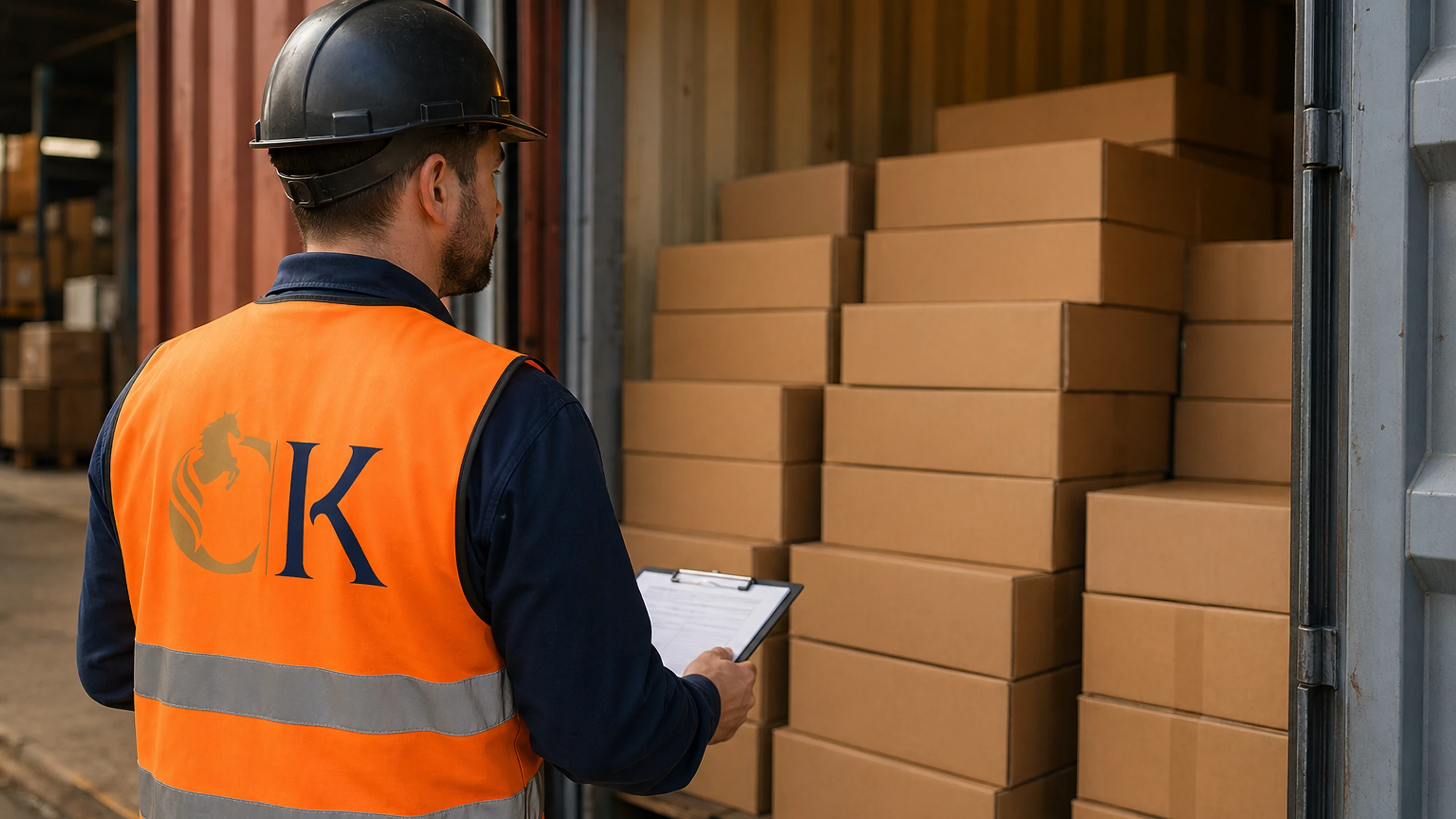
Customs Clearance Textile and Apparel
- Home
- Industries
- Textile and Apparel
We clear apparel, footwear, home textiles and technical textiles from Bangladesh, Pakistan, China, Vietnam, Turkey and Morocco - tariff-precise across HS 50-64. We screen anti-dumping codes on yarns and fabrics from China, secure preferences under GSP+, EBA and EU FTAs, halt counterfeit suspicion before seizure, verify REACH Annex XVII limits and deliver supply chain data for LkSG and CSDDD. You send us invoice, packing list and statement on origin - we collect your container by T1 from Rotterdam or Antwerp to Emmerich am Rhein.
What textile and fashion clients get from us
We do not classify your textile shipment as a flat HS 50-64 lump - we decide each line by material composition, processing step, intended use and make-up. We apply EBA duty-free access on T-shirts from Bangladesh and file the same shipment from China correctly under third-country duty. We set the manufacturer-specific TARIC additional code on anti-dumping goods such as high tenacity polyester yarn from China - so you pay the manufacturer-specific rate, not the rate for all other companies. We complete the tariff and preference work before import so your container does not get stuck at the port and post-clearance recovery does not hit you three years later.
Trust anchors at a glance
Typical textile customs scenarios
- We handle bulk apparel imports from Asia (Bangladesh under EBA, Pakistan under GSP+, Vietnam under EVFTA, China at third-country duty) - T1 from Rotterdam and Antwerp to Emmerich, ATLAS bulk filing per container.
- We set the manufacturer-specific TARIC additional code on footwear from China and Vietnam and check material groups leather/synthetic - including anti-dumping history (the last measures on leather footwear from China and Vietnam expired in 2022).
- We classify home textiles (bed linen, towels, curtains) from China and Pakistan and check in TARIC the measures in force on the day of import.
- We classify technical textiles (nonwovens, geotextiles, filter media) cleanly in HS 56-59 - critical at high value density.
- We screen EUDR exposure on leather goods and footwear with natural-rubber soles via rubber and wood derivatives (viscose).
- We clear e-commerce B2C fashion (Shein, Temu, Asos) by container bulk into fulfilment centres or by cross-border direct with ICS2 data - since July 2026 without the EUR 150 customs threshold.
Anti-dumping on fabrics, bed linen and footwear
We track the EU anti-dumping measures in force on Chinese textile and fibre products, for example on high tenacity polyester yarn (Implementing Reg. (EU) 2023/934) and on woven and stitched glass fibre fabrics (anti-dumping duty Implementing Reg. (EU) 2026/1203, countervailing duty Implementing Reg. (EU) 2026/1928). For polyester staple fibres, bed linen and footwear from China, TARIC currently (as of October 2026) shows no anti-dumping duties; the last measures on footwear with leather uppers from China and Vietnam expired in 2022. Before each import we screen the TARIC list, read the regulation text for the exact TARIC subgroup covered and set the manufacturer-specific TARIC additional code. You send us the supplier and manufacturer identification - we assign the correct code and flag the rate. On relocations to Vietnam or Morocco we verify origin substance, not just the 'Made in' label.
Preferences GSP+ and EU FTAs
We apply the EU Generalised Scheme of Preferences (Regulation 978/2012): GSP+ to secure duty-free or reduced access for apparel and textiles from Pakistan, Sri Lanka, Mongolia, Bolivia, Cabo Verde, Kyrgyzstan, the Philippines and Uzbekistan, and the EBA arrangement for Bangladesh and other least-developed countries. We verify the strict rules of origin (RoO) - for apparel from GSP+ countries weaving or knitting plus making-up in the preferential country, while for EBA countries making-up from imported fabric is sufficient. We hold and audit supplier REX statements before each import declaration. You send us the REX statement and your supplier's origin declaration - we verify, flag gaps and secure the preference. We apply the same documentation audit for EU FTAs with Vietnam (EVFTA), Singapore, UK and Canada. If preference is later withdrawn, the liability falls on the importer - we reduce that risk at source.
Trademark review and counterfeit suspicion
Under Reg. (EU) 608/2013, customs may stop consignments on suspicion of trademark or design rights infringement, notify the rights holder and seize the goods. Risk arises not only with obvious counterfeits but also with no-name assortments showing logo similarities or promotional goods carrying claimed licences. We check before every import whether you are a registered licensee, whether trademark use is authorised and whether your supplier has documented central trademark approvals. You send us your licence agreement and trademark release - we attach them to the declaration. If seizure is escalated, we accompany the procedure at the Generalzolldirektion and, where needed, coordinate with a trademark lawyer.
REACH Annex XVII and heavy metals
- We check Annex XVII entries 51 and 52: phthalates in plasticised material, including in toys and childcare articles.
- We check entry 43: azo dyes releasing carcinogenic aromatic amines - prohibited in textiles and leather.
- We check entry 47: chromium VI in leather products.
- We check entry 50: PAH in plastic and rubber parts of clothing.
- We check POP Regulation 2019/1021: PFOS, PFOA in outdoor and functional textiles.
- You send us supplier SDS and test reports - we align values against Annex XVII limits before declaration and block imports that do not meet the thresholds.
BCI, supply chains and LkSG/CSDDD
We know Better Cotton Initiative (BCI), Global Organic Textile Standard (GOTS), Fairtrade and comparable standards - private in nature but in practice prerequisites for access to German vertical retail chains. We also know where they overlap with the documentation requirements of LkSG (from 1,000 employees in Germany) and the CSDDD (applicable from 26 July 2029). You receive from us per TARIC position and per non-EU manufacturing site the import statistics with origin, supplier, quantities and values - the data foundation for your risk assessment and reporting obligation.
Pitfalls we avoid
- We prevent under-classification as 'other apparel' - which triggers post-clearance recovery of duty and import VAT differentials up to three years back.
- We verify origin substance under the GSP rules of origin (for GSP+ weaving or knitting plus making-up) before import - without that proof, preference is withdrawn on post-clearance audit.
- We set the correct manufacturer-specific anti-dumping code - a wrong or missing code automatically triggers the rate for all other companies.
- We lodge licence evidence before the declaration - without it, seizure and destruction at the importer's cost.
- We block REACH non-compliant shipments - azo dye or PFAS violations result in a market ban, recall and damages liability.