
- Home
- Service packages
-
- All Industries
- Customs Clearance Automotive
- Customs Clearance Machinery and Plant Engineering
- Customs Clearance Chemical Industry
- Customs Clearance Food and Agri
- Customs Clearance E-Commerce
- Customs Clearance Textile and Apparel
- Customs Clearance Furniture and Wood
- Customs Clearance Pharma and Life Sciences
Customs Clearance Food and Agri
- Home
- Industries
- Food and Agri
We clear your fresh and dry goods, animal and plant products, processed foods and beverages across the full regulatory chain. We coordinate TRACES NT pre-notification in TRACES NT, book the BCP slot, issue CHED-A/CHED-P/CHED-PP/CHED-D under Reg. (EU) 2017/625, verify halal and organic certificates, check anti-dumping measures and enter the correct TARIC additional code, for example for citric acid from China, manage the tariff quota for garlic from China, and we hold the EUDR due diligence statement (DDS) for cocoa, coffee, soy, palm oil and cattle products under Reg. (EU) 2023/1115. You send us consignment data and certificates — we steer every authority step from Emmerich am Rhein, covering container arrivals via Rotterdam and Antwerp.
What food and agri clients get from us
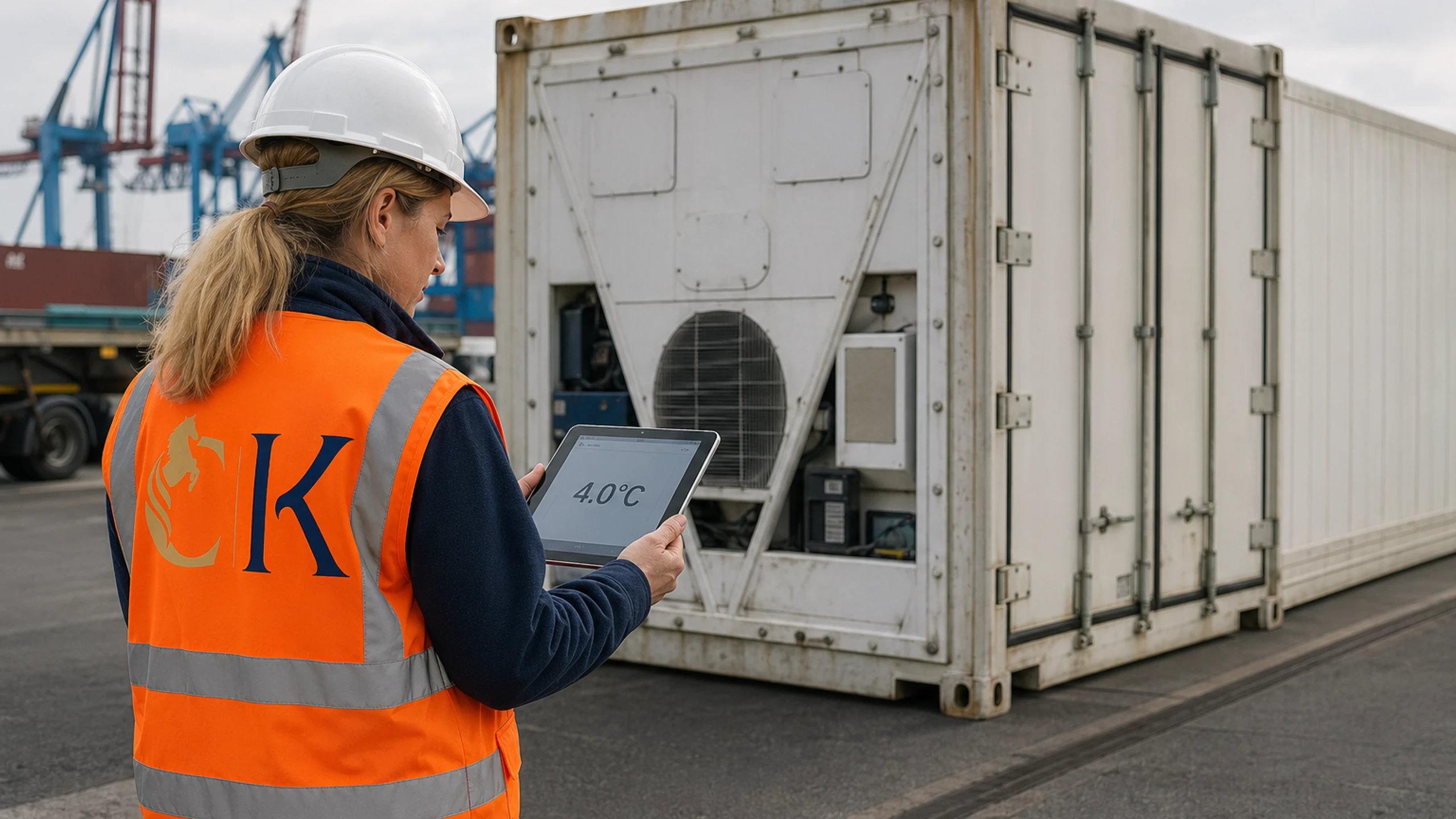
On food imports we run customs, veterinary authority, plant health, BLE, organic control body and — for food supplements — BVL simultaneously. You send us shipment data, certificates and packing list; we book the BCP slot at Rotterdam-Maasvlakte, Antwerp, Vlissingen or Frankfurt Airport, file the TRACES NT pre-notification at least one working day before arrival and issue the matching CHED. You receive the customs-conformant CHED reference before the container lands, so the cold chain keeps running without dwell time.
Trust anchors at a glance
Typical food customs scenarios
- Container imports of tropical fruit (bananas, avocado, mango) from South America and Africa via Antwerp and Rotterdam - phytosanitary CHED-PP and phyto certificate for avocado and mango (bananas are exempt from the certificate requirement), unbroken cold chain.
- Animal products (meat, fish, dairy) from non-EU countries - BCP control with CHED-P, veterinary health certificate, EU-approved third-country establishments.
- Composite products with ingredients of animal origin (e.g. pizzas, convenience) - CHED-P or exemption under Delegated Reg. (EU) 2021/630, classification in HS 16/19/21.
- Specialties and halal/organic ranges - certificate review, anti-dumping clarification, quota volume control.
- Wine, spirits, beer - excise duty (German Alcohol Tax Act AlkStG, Beer Tax Act BierStG), EMCS movement procedure.
- EUDR-relevant raw materials (cocoa, coffee, soy, palm oil, cattle, wood, rubber) - due diligence statement with geo-coordinates from 30 December 2026.
TRACES NT, CHED and Border Control Posts (BCP)
We pre-notify your control-liable consignments in TRACES NT and issue the Common Health Entry Document at least one working day before arrival (Implementing Reg. (EU) 2019/1013) — CHED-A for live animals, CHED-P for animal products, CHED-PP for plant products, CHED-D for food and feed of non-animal origin from risk countries (basis: Reg. (EU) 2017/625). You give us the third-country establishment, shipment data and certificates; we book the slot at the designated Border Control Post (Rotterdam-Maasvlakte, Antwerp, Frankfurt Airport, Hamburg), coordinate the forwarder and discharge the T1 in ATLAS. You receive the CHED reference and the BCP appointment before the container arrives.
Veterinary and plant certificates
- Veterinary health certificate: non-EU veterinary authority, covering EU-approved establishments (CC list).
- Phytosanitary certificate (PC): non-EU plant protection authority, for fruit, vegetables, cut flowers, seed, wood.
- Organic certificate per EU Organic Reg. 2018/848: control body in non-EU country with EU recognition, entry in TRACES.
- Halal certificate: recognised certifiers (e.g. JAKIM Malaysia, MUI Indonesia) for the German halal market.
- Conformity check fruit and vegetables: EU marketing standards, classification Extra/I/II by BLE or import inspection.
- GMO certificates for soy, maize, rice: authorisation under Reg. 1829/2003 mandatory.
Anti-dumping and tariff quotas for food
We check your shipment before declaration against the anti-dumping measures in force on the import date in TARIC. In the food sector this concerns, for example, citric acid from China (Implementing Reg. (EU) 2021/607), whose anti-dumping duty is extended to consignments from Malaysia. Honey and garlic are currently not subject to any EU anti-dumping duty. You import garlic from China under the EU tariff quota at a rate of 9.6%; outside the quota the third-country duty of 9.6% plus EUR 120 per 100 kg applies. For deliveries routed via third countries we verify origin against actual processing steps and enter the correct TARIC additional code per manufacturer in ATLAS. You receive the defensible code assignment before declaration — a missing or wrong additional code triggers the rate for all other companies, 42.7% for citric acid from China.
EUDR for cocoa, coffee, soy, palm oil
We hold the EUDR due diligence statement (DDS) in the EU information system and link the statement number to the ATLAS declaration — covering cattle, cocoa, coffee, palm oil, rubber, soy and wood including downstream products (e.g. chocolate). Mandatory from 30 December 2026 for large and medium-sized companies, from 30 June 2027 for micro and small enterprises (Reg. (EU) 2023/1115, amended by Reg. (EU) 2025/2650). You send us geo-coordinates of the production plots, supply chain documentation and risk assessment; we identify EUDR relevance per TARIC position, build the data flow geo-coordinate → DDS → ATLAS and hand you the statement number before declaration. Without a DDS, customs blocks the goods.
Excise duty on wine, beer, spirits
- Alcohol and sparkling wine duty: declaration to the main customs office, EMCS movement between tax warehouses.
- Beer duty: declaration to the main customs office, Plato calculation.
- Tobacco duty and coffee duty: relevant for some products.
- We combine ATLAS-Import with simultaneous excise duty declaration and avoid duplicate runs.
Pitfalls we avoid
- Incomplete TRACES pre-notification - the consignment is rejected at the BCP and the container has to return to loading or be destroyed.
- Non-EU establishment not on the EU list of approved establishments - the consignment is not eligible for import.
- Wrong classification of composite foods - wrong CHED, wrong quota allocation.
- Wrong anti-dumping code - the rate for all other companies applies, 42.7% for citric acid from China.
- Missing EUDR statement - ATLAS block, the goods may not be placed on the market.